Article: Why Wear Trousers High on the Waist?
Why Wear Trousers High on the Waist?

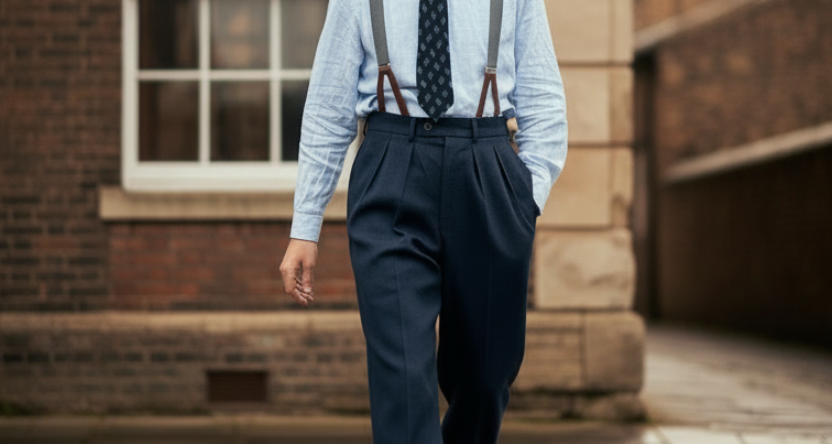
One of the defining features of men's clothing in the 1930s and 1940s was the high-waisted trouser. Sitting around the natural waist rather than low on the hips, they created a distinctive silhouette that remains central to the style of the period.
Today, we're accustomed to seeing trousers worn considerably lower, but during the 1930s and 1940s, a higher rise was a familiar feature of men's tailoring. So why were they designed this way?
It was how trousers were meant to be worn
In the 1930s and 1940s, tailored trousers were generally designed to sit at the natural waist. This was particularly important when wearing a suit, where the trousers, waistcoat and jacket were intended to work together as a balanced outfit.
The higher waistband helped create a continuous line from the chest through to the legs, giving the appearance of longer legs and a well-proportioned silhouette. Rather than sitting beneath the waistcoat, the trousers rose high enough to meet it neatly, avoiding the gap that can appear when modern, lower-rise trousers are worn with traditional tailoring.
There is an undeniable elegance in wearing trousers this way - one that today’s styles simply cannot match.

Braces played their part
Braces were widely used to support tailored trousers during this period. Fastened to buttons inside the waistband, they held the trousers at the intended height.
This worked particularly well with a higher rise, allowing the fabric to hang naturally from the waist and creating the relaxed, clean lines associated with traditional men's tailoring.
It was a practical arrangement as well as a stylistic one, and one that complemented the way suits and waistcoats were constructed.

A silhouette that defined an era
The higher rise was only one part of the look. Trousers of the period often featured fuller legs, front pleats and turn-ups, although styles varied throughout the two decades.
Together, these details created a silhouette quite different from many of today's slimmer, lower-rise designs. The proportions were intended to work as a whole, with the cut of the trousers complementing the jacket and the rest of the outfit.
High-waisted trousers were also worn beyond formal tailoring, appearing in country clothing, sportswear and everyday dress. The fabrics and details might change, but the underlying principle of wearing the waistband higher remained familiar.

Why we continue to look to this period
At Oldfield Outfitters, our clothing takes inspiration from the styles of the 1930s and 1940s. The higher rise is an important part of that heritage, not simply a detail added to make a modern garment look vintage. In our opinion they look so much nicer than modern low-rise trousers thanks to the more flattering shape they create and the way they drape.
Understanding how trousers were originally intended to sit helps explain their proportions, why they work so well with braces and waistcoats, and what gives them their distinctive character.
Fashion has changed considerably since then, but the principles behind a well-balanced outfit remain relevant. Sometimes, looking back helps us appreciate why certain designs worked so well in the first place.
Discover our Men's Trouser Collection and explore the traditional cuts that inspire Oldfield Outfitters.